CityPlace Toronto – Real Estate
Imagine being able to walk to a Leafs game, walk home after they blow a third period lead, change out of your jersey, and be on your couch with a drink in hand before the post-game panel finishes explaining what went wrong. Again.
This is not a hypothetical. This is Tuesday night in CityPlace Toronto.
For Toronto sports fans, the genuinely committed, emotionally invested, irrationally optimistic variety , CityPlace is the best neighbourhood in the city. The venue access alone justifies a serious look. Everything else is context.
The Venue Access Is Genuinely Absurd
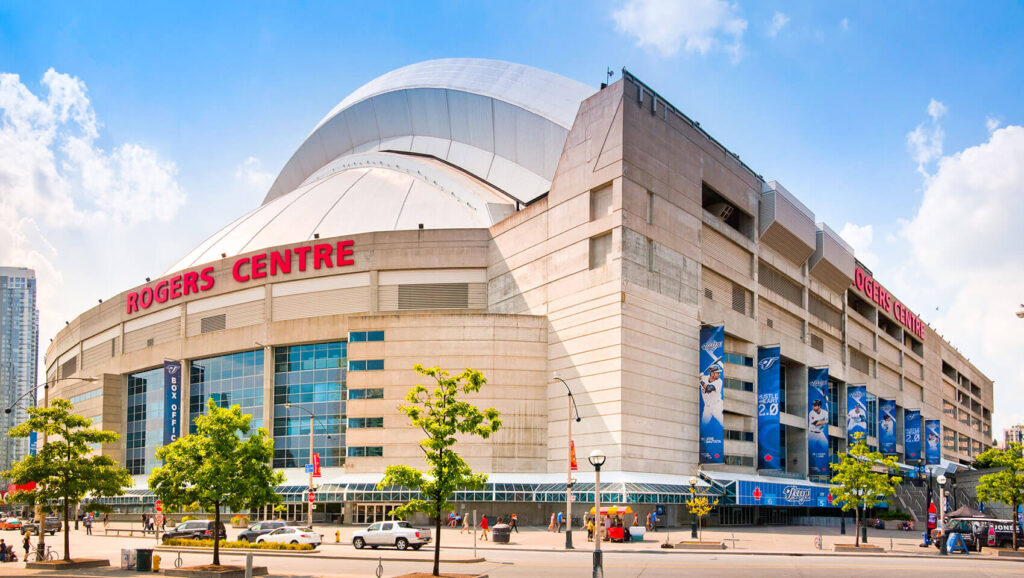
Four major Toronto sports venues within walking distance of a single neighbourhood. Scotiabank Arena, home of the Maple Leafs and Raptors, is three minutes on foot. Rogers Centre, home of the Blue Jays, is four minutes. BMO Field, home of TFC, is eight minutes. Coca-Cola Coliseum, which hosts the Marlies and Toronto Tempo, plus major events year-round, is twelve minutes.
No other neighbourhood in Toronto offers this. No other neighbourhood in North America offers this at this concentration. For a Toronto sports fan who attends games regularly, the practical value of eliminating parking costs, Uber surges, and post-game transit chaos is significant, both financially and in terms of the overall game night experience.
You go to the game. You walk home. The city untangles itself behind you while you’re already changed and debriefing the third period collapse from the comfort of your own couch.
The Neighbourhood Itself Is A Character Study
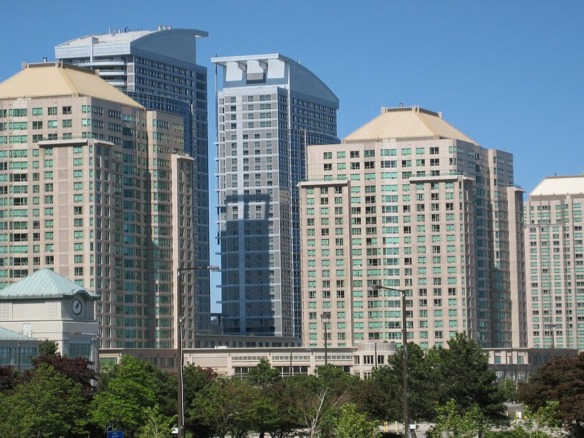
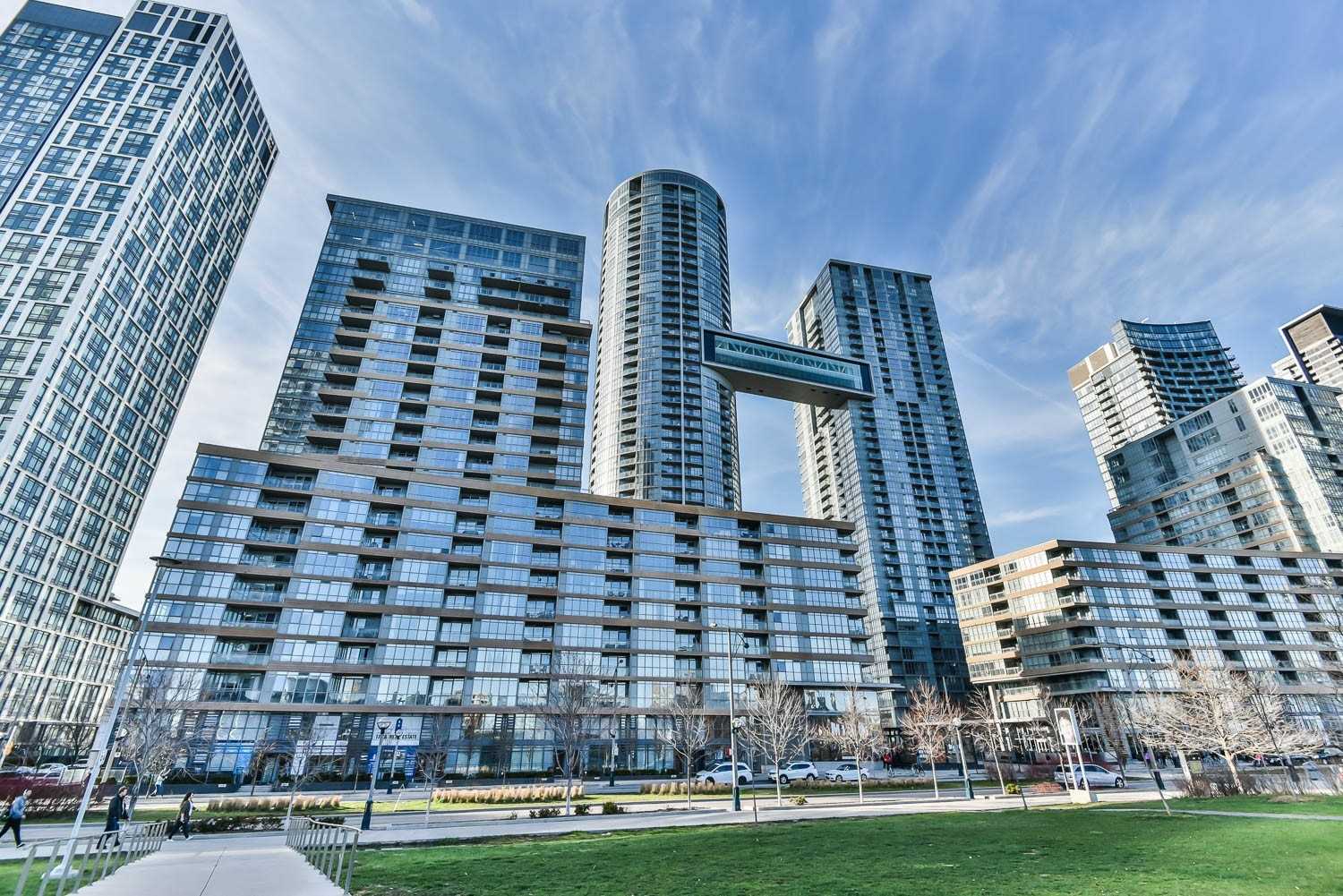
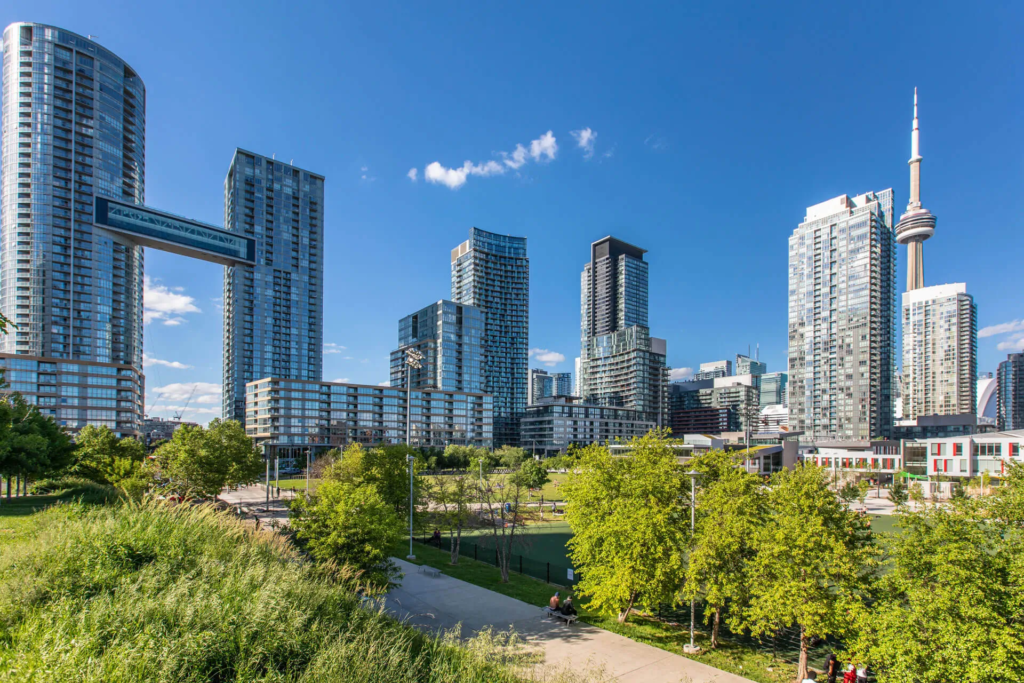
CityPlace is the most densely populated neighbourhood in Canada. This statistic sounds impressive in isolation. In practice it means tens of thousands of people, a grocery store that has quietly witnessed the full spectrum of human experience, and a construction crane that has been visible from somewhere in the neighbourhood since approximately 2003.
The amenity base is improving. It has improved substantially over the past decade, but CityPlace Toronto is still a neighbourhood that is more defined by its location than its street-level character. The internal streets are clean, the buildings are modern, and the waterfront access to the south is genuinely excellent. But if you are looking for the independent coffee shop culture of Trinity Bellwoods or the neighbourhood personality of Leslieville, CityPlace Toronto is an honest conversation rather than a straightforward yes.
What it offers instead is density of access, to the water, to the core, to the venues, and to the Gardiner if you do own a vehicle and need to get somewhere the streetcar doesn’t reach.
The Parking Situation Deserves Acknowledgment
On a regular Tuesday, CityPlace Toronto functions well. On a game night, any game night, for any of the four major venues in the vicinity, the neighbourhood’s single-intersection bottleneck becomes the defining feature of the evening. So for anyone attempting to drive in, drive out, or simply exist on King Street between 6pm and midnight, good luck.
This is not hyperbole. CityPlace residents who have lived through a sold-out Leafs playoff game, a Blue Jays home opener, and an RBC Amphitheatre concert on the same weekend understand the parking situation not as an inconvenience but as a foundational neighbourhood characteristic to be planned around rather than fought against.
The people walking home from the game while thousands of cars idle on Lakeshore are not the ones suffering. They are the ones who made the right real estate decision.
The Real Estate Reality – CityPlace Toronto
CityPlace Toronto gets dismissed in real estate conversations as a condo canyon. It’s a fair criticism with a meaningful asterisk. The neighbourhood’s reputation for density and limited character has kept prices at a discount relative to King West and the Entertainment District, creating a value gap that patient buyers have been quietly exploiting.
The waterfront access is real and undervalued. The transit connectivity is genuine. The proximity to the financial district makes CityPlace Toronto a functionally excellent option for downtown professionals who want to minimize commute time and maximize venue access simultaneously.
Not every building in CityPlace Toronto is worth what it’s asking. The variance in construction quality, building management, and long-term appreciation within the neighbourhood is significant enough to matter. Knowing which buildings perform, and which ones look better on a listing sheet than they deliver in reality, is the difference between a smart CityPlace buy and an expensive lesson.
The Verdict
CityPlace Toronto is not for everyone. It is specifically, precisely, and almost perfectly for Toronto sports fans who attend games regularly, don’t want to own a car, and have made peace with the fact that their neighbourhood is going to be very loud on a fairly regular basis.
For that person, it is genuinely the best neighbourhood in the city. The venue access is irreplaceable. The value proposition is real. And the irrational optimism required to be a Leafs, Raptors, Jays, and TFC fan simultaneously is, it turns out, exactly the same quality that makes CityPlace Toronto buyers comfortable with the neighbourhood’s imperfections.
Channel that optimism into real estate. It tends to work out better there.
This is The Hood Report — Toronto’s most most honest neighbourhood guide. New blog posts every week.
Ready to find out which CityPlace buildings are actually worth it? Contact Sean Mayers here.